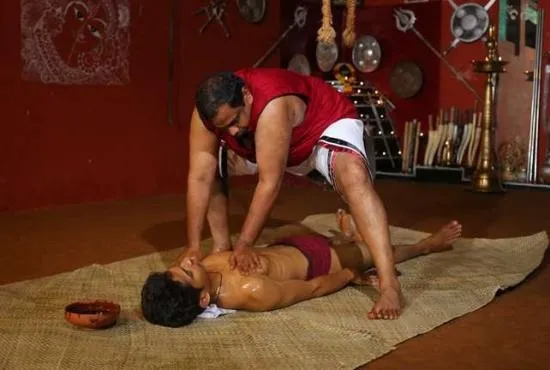
Njarambu means nerve and uzhichil means massage. In the south of Kerala, and especially in the old Travancore region, this is the Kalari treatment that masters reserve for the body’s nerve pathways.
It is built on marma knowledge: the 108 vital points of the southern tradition. A master learns these points first as a fighter, where they are targets, and then as a healer, where they are where the work begins.
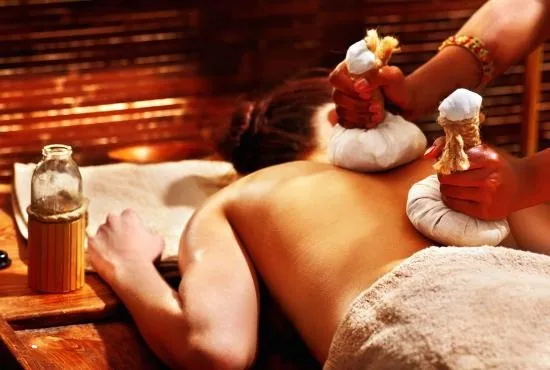
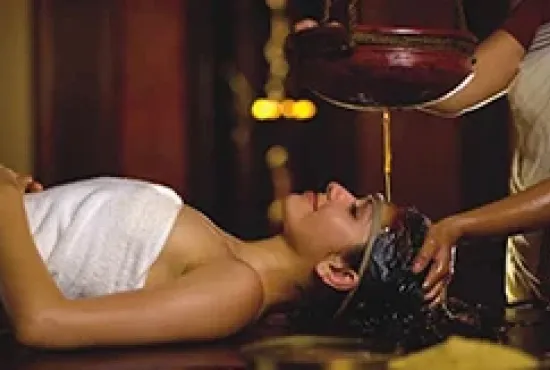
Why it is different from a spa massage
A spa massage follows a routine. Njarambuzhichil follows an assessment. The pressure, the oils, whether hands or feet are used and how many sessions you need are all decided by the master after examining you, and they change as your body responds.
Who usually comes for it
People often come after long-standing aches in the back, neck, arms or legs, after an old injury that never quite settled, or after years of physical work or sport. Many have already seen a doctor and want traditional care alongside that advice.
How a course is planned
Your first visit is an assessment, not a fixed package. The master looks at how you stand, move and respond to touch, then explains which points and oils will be used and how often to return. The plan changes as your body changes.
Complementary care, given responsibly
Thekkan Njarambuzhichil is traditional care that sits alongside medical treatment, not in place of it. Its traditional uses are described here as they have been handed down, and they are not a promise of a medical outcome.